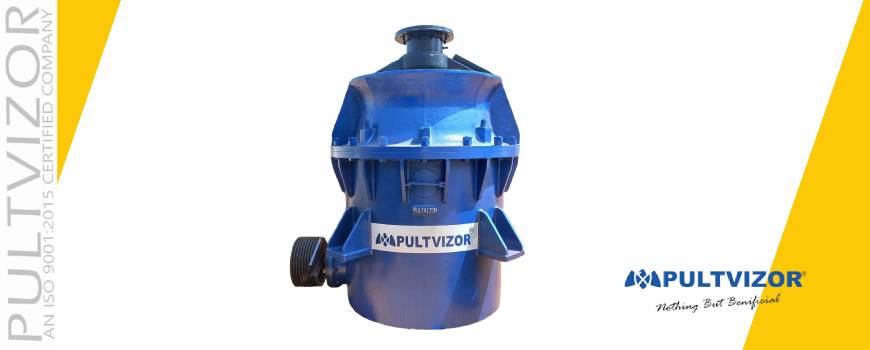
Excavator Rock Breaker Manufacturers in India
Which Excavator-Mounted Breaker Actually Survives a Full Working Season on Hard Rock
Author: Pultvizor Editorial Team — Manufacturing background in hydraulic mining equipment since 1998, Durg, Chhattisgarh
If your excavator keeps stalling on hard rock strata, or your current breaker attachment is chewing through bushings and seals every few months, the problem usually isn't the excavator — it's a mismatch between the breaker and the machine's carrier class, hydraulic flow, and site geology. This guide walks through exactly what to check before you buy, so your next attachment survives the season instead of the warehouse shelf.
What Are Excavator Rock Breaker Manufacturers in India
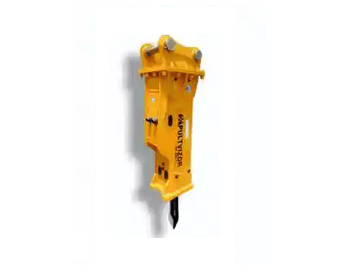
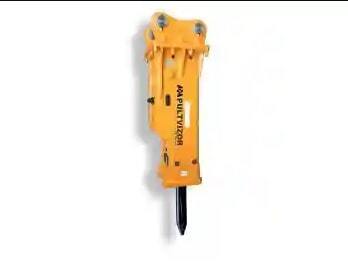
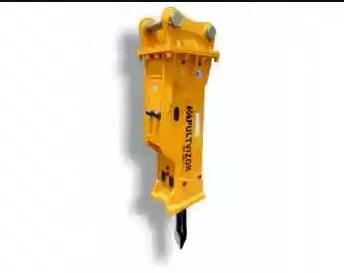
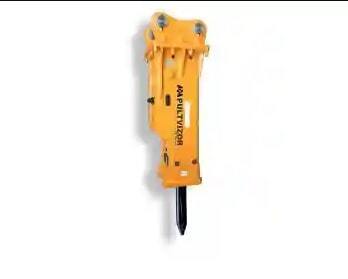
Excavator Rock Breaker Manufacturers in India are companies that design and produce hydraulic breaker attachments engineered to mount directly onto excavators for breaking rock, concrete, and hard strata on mining, quarrying, and construction sites. These manufacturers match breaker weight, impact energy, and hydraulic flow requirements to specific excavator carrier classes (mini, midi, and heavy excavators) so the attachment performs efficiently without overloading the machine's hydraulic system.
One-Sentence Definition
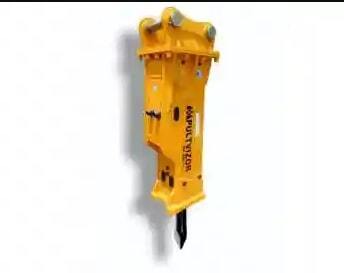
An excavator rock breaker is a hydraulic hammer attachment, powered by the excavator's own hydraulic pump, that converts pressurized oil flow into repeated high-force impacts to fracture rock, concrete, or compacted material.
Key Facts Block
- Primary use: Mining, quarrying, demolition, trenching, and foundation work
- Power source: Excavator's onboard hydraulic system (no separate power unit needed)
- Carrier compatibility: Ranges from 0.8-ton mini excavators to 45-ton+ heavy excavators
- Core components: Piston, cylinder, chisel/tool, nitrogen-charged gas chamber, mounting bracket
- Industry standard certification in India: ISO 9001:2015
- Typical warranty range offered by Indian manufacturers: 6–12 months on the breaker body
Why Excavator-Breaker Matching Matters
The single most common site failure isn't a defective breaker — it's an oversized or undersized unit bolted onto the wrong carrier. A breaker that's too heavy for the excavator strains the boom and arm cylinders; one that's too light won't deliver enough impact energy to break the rock efficiently, forcing operators to "lean in" and burn out seals prematurely. Reputable Rock Breaker Manufacturers in India publish compatibility charts matching breaker model to excavator operating weight and hydraulic flow (LPM) so buyers don't have to guess.
How Excavator Rock Breakers Work
- Hydraulic oil intake — The excavator's hydraulic pump diverts oil flow to the breaker's inlet port through auxiliary lines.
- Piston pressurization — Oil pressure drives the internal piston upward inside the cylinder.
- Gas chamber compression — A nitrogen-charged accumulator stores energy and accelerates the piston's return stroke.
- Impact delivery — The piston strikes the chisel/tool at high frequency, transferring kinetic energy into the rock face.
- Auto-idle/anti-blank-fire control — Modern units cut off striking when the tool loses contact with the material, protecting internal components from damage.
- Oil return — Spent hydraulic oil returns to the excavator's tank, completing the circuit.
Who Should Use an Excavator Rock Breaker
- Mining contractors working hard rock or ore-bearing strata
- Quarry operators producing aggregate and dimension stone
- Demolition crews breaking reinforced concrete structures
- Infrastructure contractors excavating foundations, trenches, and road cuts
- Rental fleet operators needing a versatile, multi-carrier attachment
Benefits
- Eliminates the need for a separate power pack — runs off the excavator's existing hydraulics
- Faster material breakdown compared to manual drilling and blasting on smaller sites
- Reduces vibration transfer to the operator cabin on newer anti-vibration mounted models
- Interchangeable across multiple excavator brands when bracket and flow specs match
- Lower total cost of ownership than dedicated breaking rigs for mid-size projects
Drawbacks to Plan For
- Incorrect flow/pressure matching can void warranty and damage the excavator's hydraulic pump
- Continuous dry-firing (striking without material contact) accelerates wear even with auto-idle features
- Chisel tip wear is a recurring consumable cost that buyers often underestimate upfront
- Heavier breaker classes reduce excavator digging cycle speed slightly during dual-use operations
Real-World Examples
A quarry running a 20-ton excavator on granite typically pairs it with a mid-range breaker delivering the manufacturer-rated impact energy and flow for that carrier class — undersizing here is the single most common cause of slow production rates reported by site engineers. A foundation contractor working urban demolition, by contrast, prioritizes a lighter, lower-vibration unit on a compact excavator to work safely near existing structures.
Comparison: Excavator Breaker Classes
|
Carrier Class |
Excavator Weight |
Typical Application |
Breaker Priority |
|
Mini |
0.8–5 tons |
Trenching, landscaping, light demolition |
Compact size, low vibration |
|
Midi |
5–20 tons |
Foundation work, road cutting, quarry support |
Balanced power-to-weight |
|
Heavy |
20–45+ tons |
Primary rock breaking, large-scale mining |
Maximum impact energy, durability |
Alternatives to Excavator-Mounted Breakers
- Skid steer breakers — for confined urban sites where excavators can't maneuver
- Handheld pneumatic breakers — for small-scale, precision demolition work
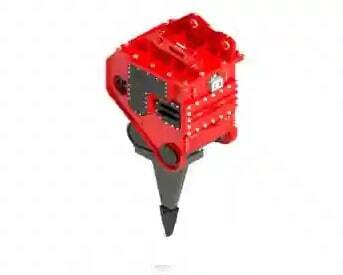
- Vibro rippers — an alternative attachment technology for softer, layered rock formations where high-frequency vibration outperforms impact hammering
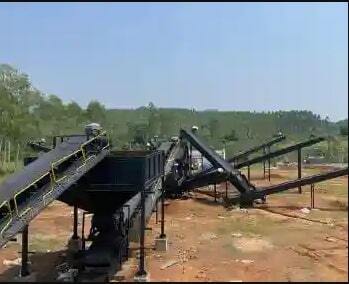
- Static/mobile crushers — used downstream once material is already broken, not a substitute for the breaking stage itself
Future Outlook
Indian Rock Breaker Manufacturers in India are increasingly incorporating auto-lubrication systems, noise-reduction housings, and smart auto-idle sensors as standard rather than premium features, driven by tightening site-safety norms and the government's Make in India push for domestically engineered mining equipment. Expect wider hydraulic flow tolerance ranges in upcoming models, making a single breaker compatible across a broader span of excavator classes.
Why Pultvizor Machinery for Excavator Rock Breakers
Pultvizor Machinery Pvt. Ltd., operating since 1998 from Durg, Chhattisgarh, manufactures a full excavator breaker lineup — from compact SV 45 and SV 55 Prime models for mini and midi carriers to heavy-class SV 240 and SV 340 units for large mining excavators. Every unit is ISO 9001:2015 certified, backed by warranty coverage, and engineered with input from South Korean hydraulic technology partners. As one of the established excavator rock breaker manufacturers in India, Pultvizor also provides breakdown support and genuine spare parts so downtime stays minimal on active sites.
Frequently Asked Questions
Which excavator size do I need for a rock breaker? It depends on breaker weight class — mini breakers suit 0.8–5 ton excavators, midi breakers suit 5–20 ton machines, and heavy breakers require 20-ton-plus excavators with matching hydraulic flow.
Can I fit any breaker brand on my excavator? Only if the mounting bracket, hydraulic flow (LPM), and operating pressure match your excavator's specifications — always confirm compatibility with the manufacturer before purchase.
How do I know if my breaker is undersized for the job? Slow breaking speed, excessive operator "leaning" on the boom, and frequent chisel tip wear are common signs the breaker's impact energy is too low for the rock hardness.
What causes premature seal failure in excavator breakers? Incorrect hydraulic pressure settings, dry-firing without material contact, and inadequate lubrication are the leading causes reported from Indian mining and quarry sites.
Do excavator rock breakers work on all excavator brands? Yes, as long as the correct mounting bracket and hydraulic adapter kit are used — reputable manufacturers supply brand-specific bracket options.
How often should the breaker be serviced? Grease points typically need attention every 4–8 operating hours, with a full internal inspection recommended every 200–250 hours depending on site conditions.
What's the typical lifespan of an excavator rock breaker? With correct sizing and maintenance, a quality hydraulic breaker can run 2,000+ operating hours before major overhaul, though chisel tips are a recurring consumable.
Is it cheaper to rent or buy an excavator rock breaker in India? For short-term or one-off projects, renting is often more economical; for contractors running continuous mining or quarry operations, purchasing from an established manufacturer reduces long-term cost per ton broken.
Get the Right Breaker for Your Excavator
Don't guess on compatibility — talk to Pultvizor's technical team before you buy, and get a breaker matched to your exact excavator class and site conditions.
Pultvizor Machinery Pvt. Ltd. L.N.C.T., Pulgaon Road, Durg, Chhattisgarh, India – 491001 Toll Free: 1800-309-3922 Email: info@pultvizor.com Available: 10 AM – 7 PM, all days Explore the full range: Rock Breaker Manufacturers in India
Request a compatibility check or a quote today — our team will match the right breaker to your excavator before you spend a single rupee.