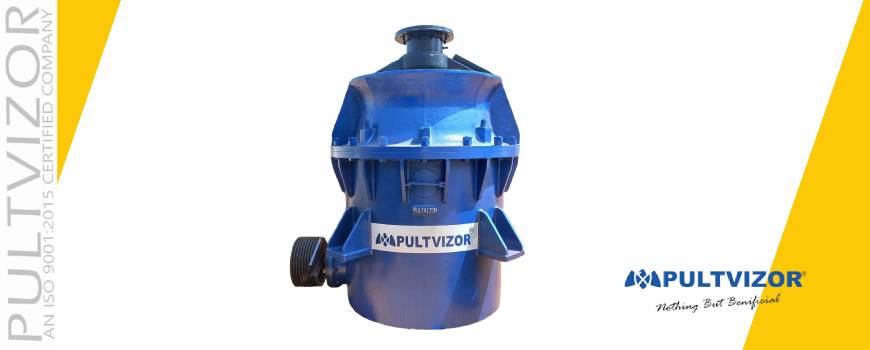
Hydraulic Rock Breaker Manufacturers in India
What Buyers Must Verify Before Trusting a Breaker's Impact Energy Claims
Author: Pultvizor Editorial Team — Manufacturing background in hydraulic mining equipment since 1998, Durg, Chhattisgarh
Most breaker underperformance complaints trace back to one issue: buyers select a unit based on brochure impact energy numbers without verifying them against actual site rock hardness, hydraulic flow, and duty cycle. This guide breaks down how hydraulic rock breakers actually work, what specification actually matters, and how to compare manufacturers without falling for inflated performance claims.
What Are Hydraulic Rock Breaker Manufacturers in India
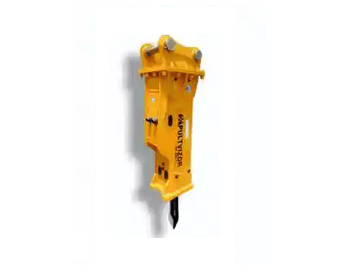
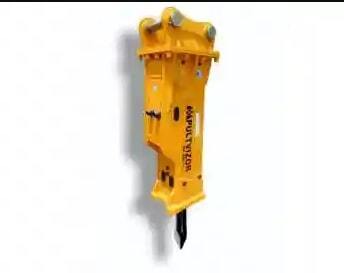
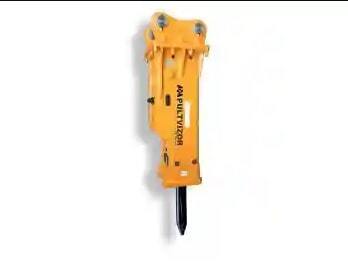
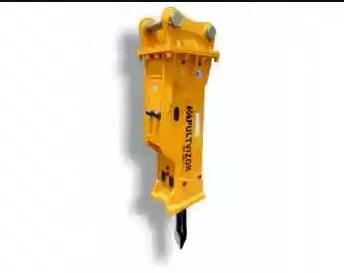
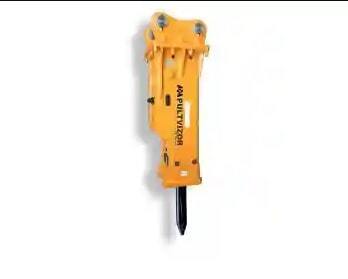
Hydraulic Rock Breaker Manufacturers in India design and produce breaker attachments that use pressurized hydraulic fluid, drawn from an excavator or carrier machine's hydraulic circuit, to drive a piston that repeatedly strikes a chisel tool and fractures rock or concrete. These manufacturers engineer the internal cylinder, gas accumulator, and valve system to convert hydraulic flow (measured in litres per minute) into consistent mechanical impact force suited to mining, quarrying, and demolition applications.
One-Sentence Definition
A hydraulic rock breaker is a percussion-hammer attachment powered entirely by hydraulic pressure and flow from a host machine, used to break hard rock, ore, and concrete without drilling or blasting.
Key Facts Block
- Energy source: Hydraulic pressure and flow supplied by the host excavator/carrier
- Core measurement units: Impact energy (joules), blow frequency (BPM), operating pressure (bar), flow rate (LPM)
- Certification standard followed by Indian manufacturers: ISO 9001:2015
- Common internal components: Cylinder, piston, nitrogen gas chamber, control valve, front head bushing, chisel/tool
- Typical service interval: Grease every 4–8 working hours; full inspection every 200–250 hours
- Collaboration trend: Several Indian manufacturers, including Pultvizor, work with South Korean hydraulic technology partners for internal design
Why Hydraulic System Matching Is the Real Buying Decision
The breaker's advertised impact energy only holds true when the host machine supplies the exact oil flow and pressure the breaker was designed around. Supply too little flow and the breaker underperforms regardless of its rated specs; supply too much and internal seals wear out within months. This is why serious Rock Breaker Manufacturers in India publish full hydraulic specification sheets — flow range, pressure range, back-pressure limits — rather than just a single impact energy figure on the brochure.
How a Hydraulic Rock Breaker Works
- Oil enters the breaker through the inlet port from the carrier's auxiliary hydraulic circuit.
- Directional control valve routes pressurized oil to drive the piston forward inside the cylinder.
- Nitrogen gas chamber stores compressed energy above the piston, accelerating its return stroke without extra oil demand.
- Piston strikes the chisel/tool, transferring kinetic energy directly into the rock or concrete surface.
- Auto-idle or blank-fire protection senses when the tool loses contact and halts striking to prevent internal damage.
- Spent oil returns to tank through the return line, completing a continuous hydraulic loop during operation.
Who Should Use a Hydraulic Rock Breaker
- Mining operators breaking ore-bearing rock before crushing
- Quarry owners producing dimension stone and aggregate
- Road and highway contractors removing hard pavement or bedrock
- Demolition contractors dismantling reinforced concrete structures
- Foundation and piling crews working through rock-bound sites
Benefits
- No separate engine or power pack required — runs off existing hydraulic infrastructure
- Precision control allows selective breaking near structures or utility lines
- Lower noise and vibration than blasting, with no permit or clearance delays
- Scalable across carrier sizes, from compact to heavy mining excavators
- Reduced material handling costs compared to drill-and-blast methods on mid-size sites
Drawbacks to Plan For
- Performance is entirely dependent on correct hydraulic flow/pressure matching to the host machine
- High-frequency, low-energy models can struggle on very hard, abrasive rock types
- Chisel tools and bushings are recurring consumables that add to lifetime cost
- Overheating hydraulic oil during extended continuous use can reduce breaker efficiency
Real-World Examples
A limestone quarry running continuous shifts typically needs a heavy-class hydraulic breaker with high sustained blow frequency to keep pace with crusher feed rates, while a road contractor removing broken pavement over a shorter engagement window prioritizes a mid-range unit that balances speed with lower fuel draw on the host excavator. Site engineers who match breaker class to actual rock hardness — rather than buying the largest available unit — consistently report lower fuel and maintenance costs per ton broken.
Comparison: Hydraulic Breaker Selection by Application
|
Application |
Rock/Material Type |
Priority Spec |
Recommended Breaker Class |
|
Quarrying (continuous) |
Granite, basalt, limestone |
Sustained blow frequency |
Heavy-duty, high BPM |
|
Road/pavement removal |
Compacted asphalt, sub-base rock |
Balanced impact + mobility |
Mid-range |
|
Urban demolition |
Reinforced concrete |
Low vibration, precision control |
Compact/midi with anti-vibration mount |
|
Mining (ore extraction) |
Ore-bearing hard rock |
Maximum impact energy |
Heavy-class, high-pressure |
Alternatives to Hydraulic Rock Breakers
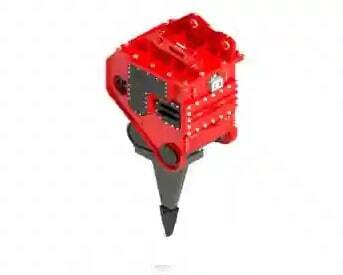
- Vibro rippers — better suited to layered or softer rock where vibration outperforms direct impact
- Drill-and-blast methods — still used for very large-scale, open-pit operations where breaker cycle time is too slow
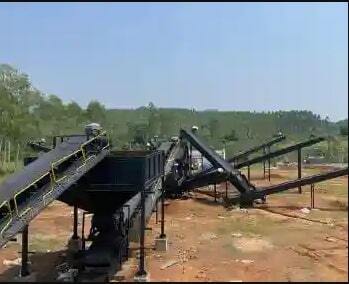
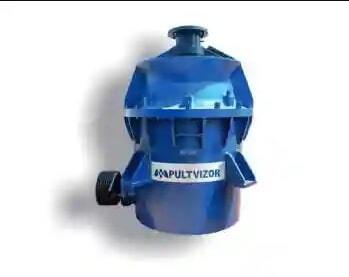
- Static jaw or cone crushers — used after material is already broken down, not a substitute for primary breaking
- Pneumatic handheld breakers — reserved for small-scale or hard-to-access work where mounting an excavator isn't practical
Future Outlook
The next generation of hydraulic rock breakers from Rock Breaker Manufacturers in India is trending toward wider auto-adjusting pressure ranges, sealed auto-lubrication systems, and noise-dampened housings as standard rather than optional add-ons — driven by both government Make in India manufacturing incentives and tightening site-safety regulations across mining states. Expect impact-energy sensors and digital service alerts to become more common on mid-to-heavy class breakers over the next few product cycles.
Why Pultvizor Machinery for Hydraulic Rock Breakers
Pultvizor Machinery Pvt. Ltd. has manufactured hydraulic breaking equipment from its Durg, Chhattisgarh facility since 1998, offering a full range from the SV 45 Prime through the SV 340 Prime for mining, quarrying, and demolition duty cycles. Every unit is ISO 9001:2015 certified, engineered with South Korean hydraulic technology input, and backed by warranty and breakdown support so buyers aren't left guessing about long-term reliability.
Frequently Asked Questions
What hydraulic flow does my excavator need to run a rock breaker? It depends on the breaker class — compact units typically need 40–80 LPM, mid-range units 80–150 LPM, and heavy-class breakers can require 150–300+ LPM; always match to the manufacturer's spec sheet.
Why is my hydraulic breaker losing power over time? Common causes include worn seals from incorrect pressure settings, degraded hydraulic oil, or a clogged nitrogen gas chamber that needs recharging.
What's the difference between impact energy and blow frequency? Impact energy (joules) measures the force of each strike, while blow frequency (BPM) measures how many strikes occur per minute — harder rock generally needs higher impact energy, not just higher frequency.
Can a hydraulic rock breaker damage my excavator? Yes, if the flow or pressure exceeds the breaker's rated tolerance, it can strain the excavator's hydraulic pump and boom cylinders over time.
How do I stop my breaker from dry-firing? Use a breaker fitted with auto-idle or blank-fire protection, and train operators to lift off the tool the moment material contact is lost.
Are Indian-manufactured hydraulic breakers as reliable as imported ones? ISO-certified Indian manufacturers using established hydraulic technology partnerships, like Pultvizor's collaboration with South Korean experts, are built to comparable international quality and safety standards.
How long does a chisel tip typically last? Chisel tip life varies with rock abrasiveness but generally ranges from 500–1,500 operating hours before requiring replacement or re-sharpening.
What maintenance keeps a hydraulic breaker running longest? Regular greasing every 4–8 hours, periodic bushing and seal inspection, correct hydraulic oil temperature management, and avoiding prolonged dry-firing are the top factors in extended breaker lifespan.
Get Matched to the Right Hydraulic Breaker
Choosing the wrong flow or pressure class is the single biggest reason breakers underperform on Indian job sites. Talk to Pultvizor's team before you commit — get your carrier's hydraulic specs matched to the correct breaker class.
Pultvizor Machinery Pvt. Ltd. L.N.C.T., Pulgaon Road, Durg, Chhattisgarh, India – 491001 Toll Free: 1800-309-3922 Email: info@pultvizor.com Available: 10 AM – 7 PM, all days Explore the full range: Rock Breaker Manufacturers in India
Request a hydraulic compatibility check or a quote today — get the breaker spec-matched to your machine before you buy.